what are you looking for?

Sample preparation failures often trace back to uneven density gradients or pressure decay during pelletizing. For clean energy labs, battery research facilities, and analytical teams running XRF or FTIR, producing uniform pellets is critical for reliable data. Selecting between manual, electric, and fully automated drives determines both sample throughput and experimental consistency. This guide analyzes mechanical requirements, drive selection, and factory sourcing standards to help procurement teams specify the right tonnage, tooling, and holding accuracy for sensitive laboratory workflows.
Pressure stability and precise dwell times dictate pellet integrity in solid-state battery and ceramics research. A standard 24T hydraulic press provides the necessary force range to compact fine powders without introducing micro-cracks or density variations across the pellet diameter.
*Specification Parameter* *Standard Requirement* *Impact on Sample Integrity* Maximum Pressure 24 Metric Tons Ensures target density in hard ceramics Working Stroke 20 mm to 30 mm
Accommodates standard die sets |
*Pressure Stability* *±0.1 MPa per hour* *Prevents internal micro-delamination*
Maintaining consistent force during the compression cycle allows trapped air to evacuate cleanly through the tooling clearances. For operations utilizing specialized equipment, structural rigidity prevents ram deflection, ensuring uniform density across every test specimen.

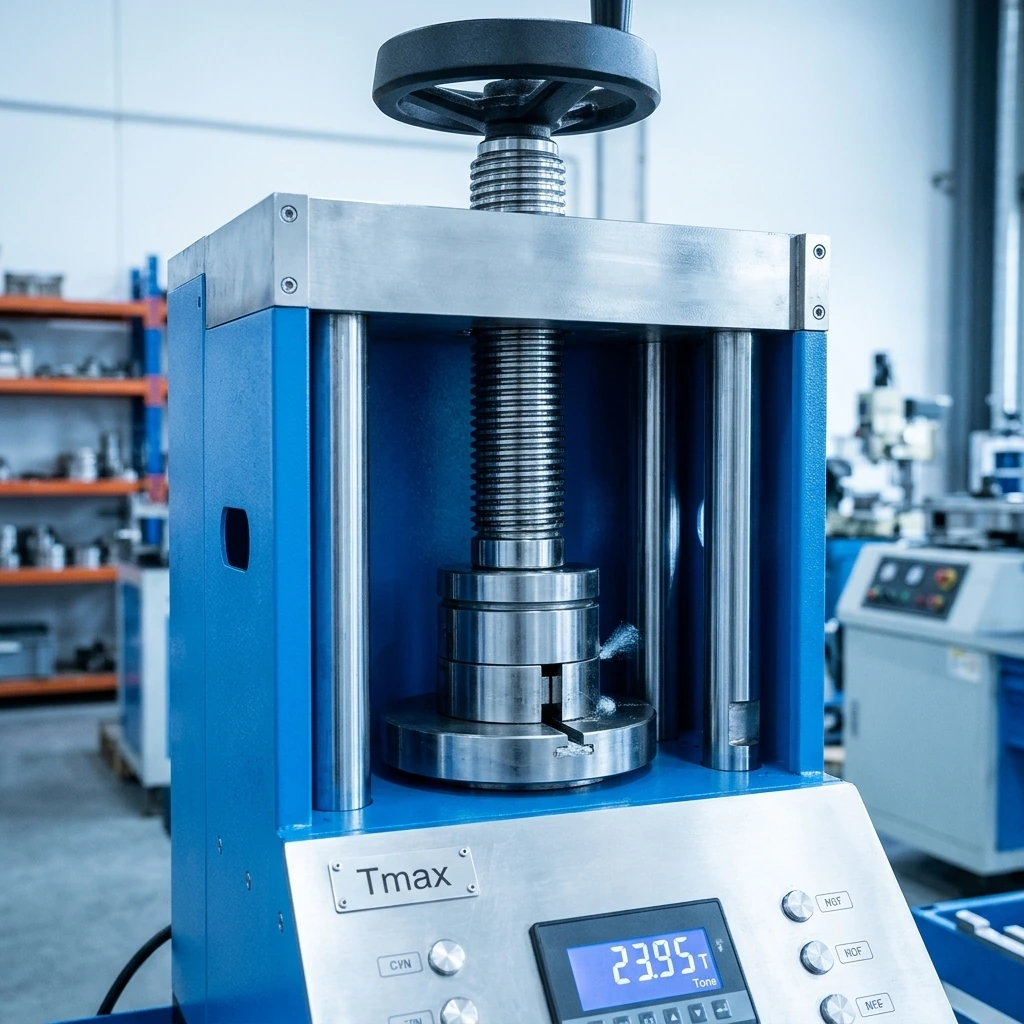
Selecting the appropriate drive mechanism affects labor efficiency, repeatability, and procurement budgets. Manual and auto drives 24t hydraulic press configurations serve distinct operational scales in academic and industrial settings.
Manual hand-pump units fit low-volume analytical testing where operators prepare occasional KBr or XRF samples. In contrast, electric and automated models utilize program-controlled hydraulic power packs. These programmable units automate pressure buildup, dwell time, and controlled decompression.
Researchers often pair automated densification equipment with high-temperature systems to study sintering kinetics. Decompression profiling prevents thermal shock spalling during subsequent heat treatment cycles.
Preparing fragile chemical compounds demands strict alignment between tooling and press platens. Utilizing a 24t hydraulic press for superconductor prep requires uniform force distribution to prevent crystal shear in brittle mixed-oxide precursors.
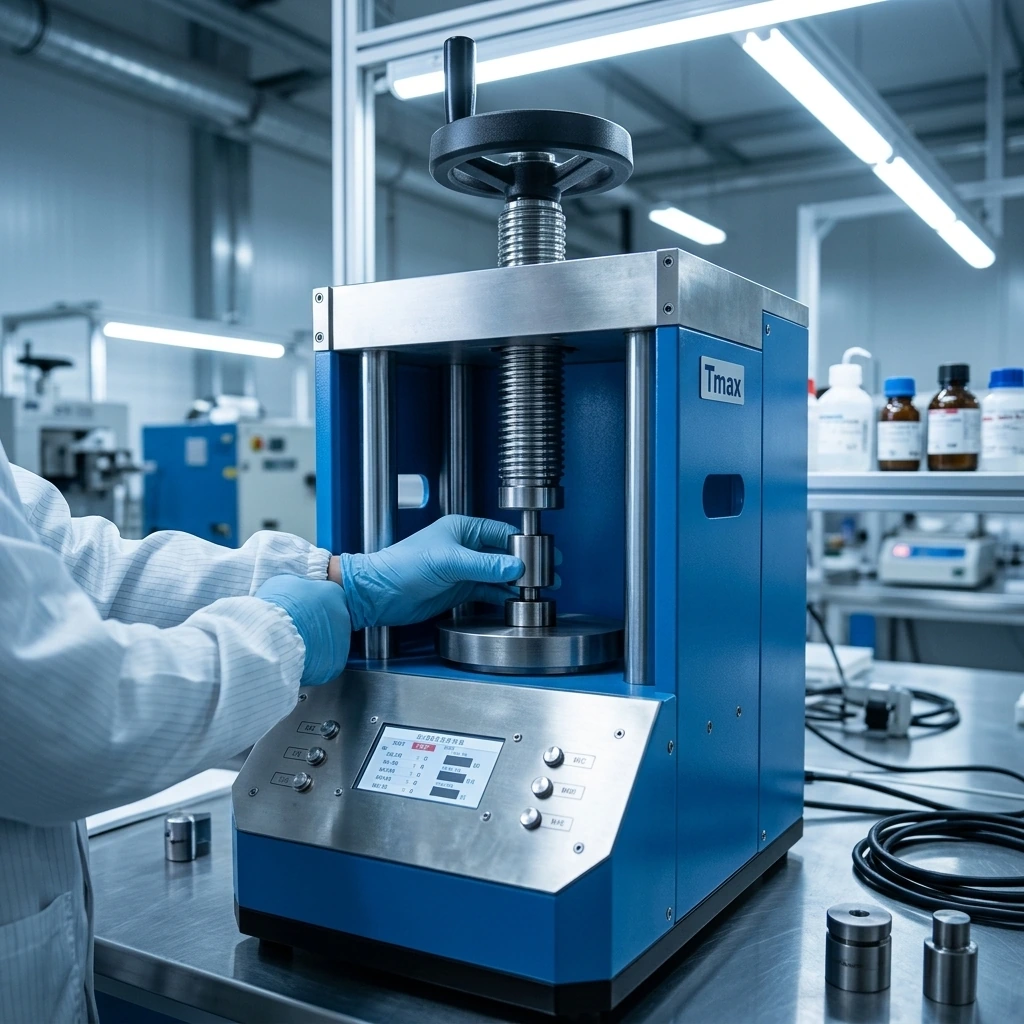
Similarly, setting up a 24t hydraulic press for powder ceramics involves balancing mechanical load against die wall friction. Matching high-tolerance hardened tooling with rigid press frames extends punch longevity and eliminates edge chipping in dense ceramic discs.
Institutional buyers face rigorous qualification procedures when replacing legacy imported press units. Procurement teams must verify manufacturer manufacturing credentials, including ISO9001 and CE compliance. Factory direct supply ensures ready stock availability, standardized wear parts, and predictable shipping schedules. Lineng machinery provides two-year warranty coverage, supporting long-term university projects and industrial pilot lines.
Yes, the system delivers stable force holding with minimal pressure loss over extended dwell intervals. Such pressure stability prevents structural defects during the synthesis of superconducting discs.
Ceramic powders are abrasive and generate high lateral forces during compaction. Selecting proper die clearance, paired with smooth programmable ram movement, prevents uneven tool wear and flaking.
Manual units rely on hand pumping and visual gauge monitoring, which suits low-volume testing. Auto drives feature automated pressure buildup and programmable decompression profiles, ensuring operator-independent consistency for high-throughput labs.

Quanzhou Lineng Mechinery and Equipment Co., Ltd is a technology-based enterprise, integrating R&D, manufacturing, sales and service.

 IPv6 network supported


