what are you looking for?

Sample preparation in material science often fails because of uneven compaction or erratic pressure holding. Laboratory technicians handling spectroscopic analysis or battery electrode trials require steady compression without mechanical drift. Selecting a reliable benchtop press directly influences analytical accuracy and testing throughput. This guide surveys compact hydraulic pelleting units, comparing drive configurations, pressure stability, and die compatibility. You will find practical engineering criteria to evaluate equipment performance, streamline lab budgets, and secure direct manufacturer support.
Solid sample integrity depends strictly on uniform density across the pressed disc. In powder research, uneven density gradients cause cracked pellets, distorted spectral peaks, or delamination in electrochemical tests. A compact 3T hydraulic press delivers the low-end sensitivity needed for delicate optical discs, preventing over-compaction while maintaining boundary stability.
Accurate pressure retention remains essential when pressing functional materials. Fine powders such as superconducting precursors, advanced ceramics, and composite energy storage matrices need continuous dwell times to allow trapped air evacuation. Modern tabletop presses integrate rigid frame designs that mitigate mechanical deflection. Research groups working across broad force profiles often choose a versatile 3t-50t capacity 3t hydraulic press platform to cover both soft halide discs and dense metal matrices under one roof.

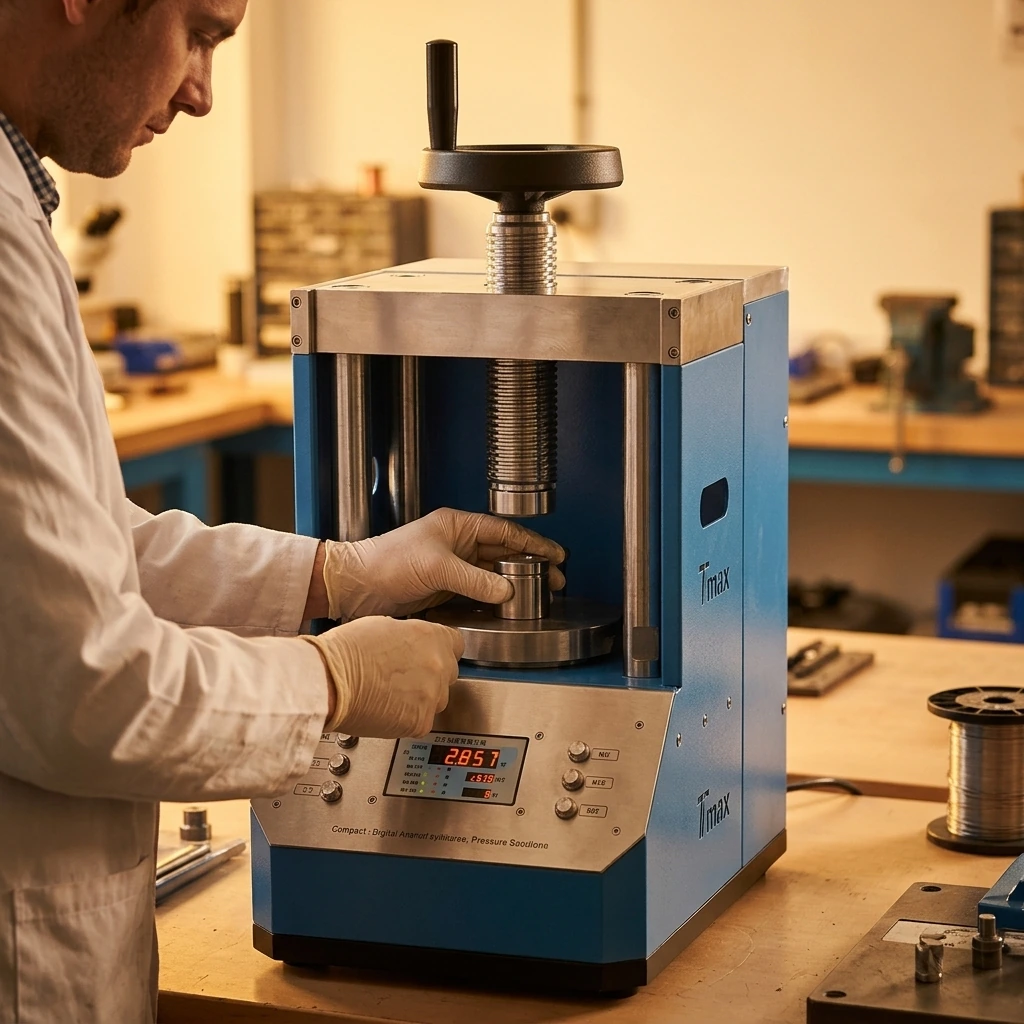
Selecting the correct actuation method depends heavily on test volume, labor constraints, and data repeatability goals. Hand-operated hydraulic units provide portable operation, making them a fixture in teaching facilities and intermittent analytical runs.
Manual presses rely on mechanical pumping, introducing slight operator variance during force ramp-up. Motorized electric systems replace lever pumping with push-button actuation, ensuring steady ramp speeds and predictable dwell cycles. Fully automatic models introduce programmable logic controls, executing timed multi-stage cycles. When configuring your research suite alongside primary , consider how daily sample frequency dictates your automation requirements.
*Drive Type* *Pressure Control* *Ideal Operation* *Operator Dependency*
| Manual Hydraulic
*Gauge reading* *Low-volume testing* *High* Electric Motorized Digital preset Routine sample prep Low *Programmable Auto* *Multi-stage ramp* *Continuous quality control* *Minimal*
Integrating motorized actuation protects brittle pellet dies from impact shock. Consistent loading rates also preserve critical microstructures during energy storage material compaction.
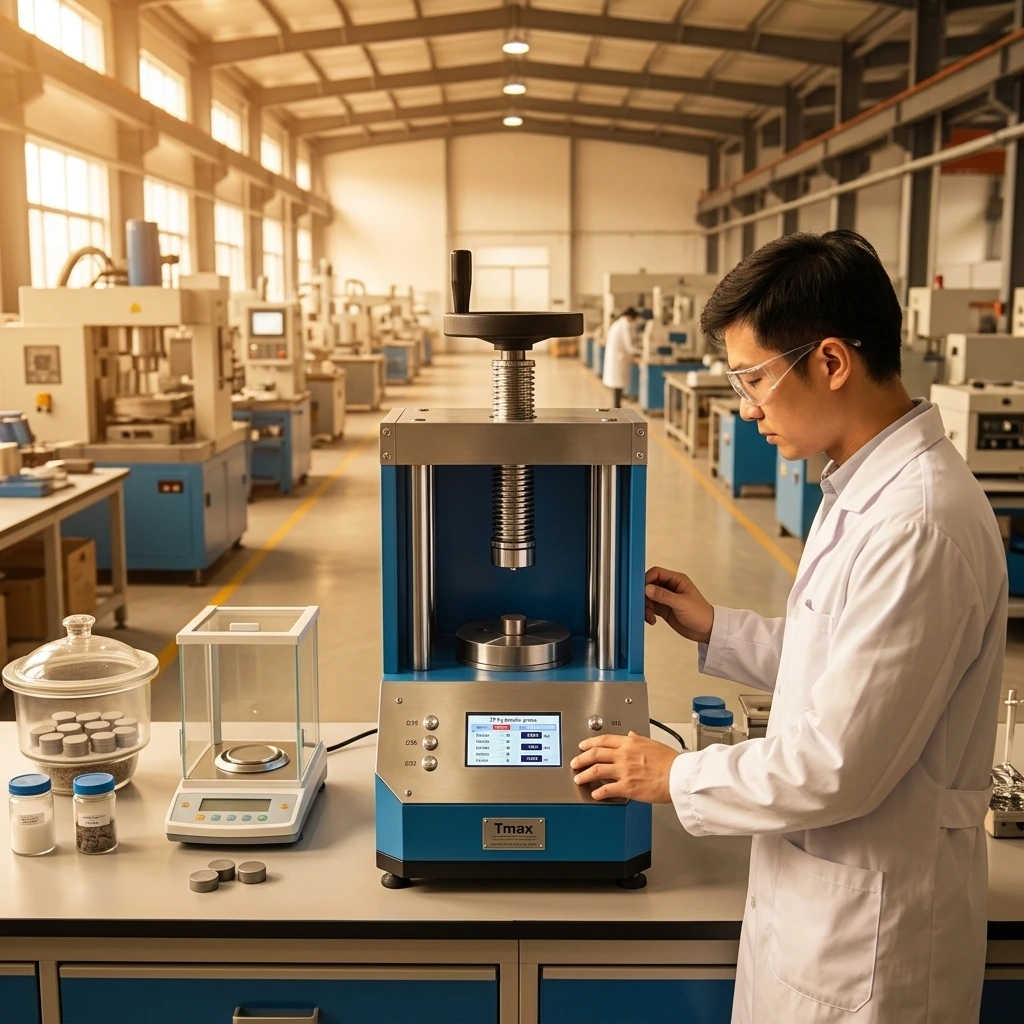
Benchtop presses serve distinct analytical protocols requiring precise tooling. Deploying a dedicated 3t hydraulic press for lab testing allows researchers to isolate sensitive sample matrices from heavy industrial contamination.
For infrared and fluorescence sample preparation, selecting a specialized 3t hydraulic press for xrf analysis ensures crack-free, transparent pellets with clean surface finishes. Thin powder discs must withstand beam irradiation without shedding particles into expensive optical chambers. In energy storage facilities, compact presses compress active slurries and solid-state electrolytes into uniform pellets. Teams scaling their research often match benchtop pressing tools with specialized systems like an to correlate bulk pellet data with thin-film roll performance. Standardizing on precision equipment eliminates mechanical variances between exploratory synthesis and final electrochemical characterization.
Academic institutions and commercial testing centers face rigorous procurement guidelines. Beyond headline clamping force, evaluation teams must examine platen parallelism, ram stroke limits, and seal durability. Direct manufacturer sourcing reduces acquisition costs and guarantees prompt access to spare seals and custom die sets.
Verifying factory certifications ensures equipment meets institutional safety mandates, including CE compliance for low-voltage motorized systems. Direct engagement with experienced machine builders also secures technical guidance for non-standard compaction geometries. Factory testing documentation provides peace of mind before shipping, minimizing setup delays upon arrival.
Standard platen clearances accommodate conventional cylindrical dies alongside custom split-sleeve or square tooling. Platen daylight and ram travel match standard dimensional envelopes across analytical sample preparation formats.
Standard benchtop presses and baseline tooling ship directly from available warehouse inventory. Custom pressing fixtures, automated multi-stage options, or modified electrical specifications follow defined factory assembly routines.
Standard electric and manual pressing systems carry CE certification for laboratory deployment. Complete compliance documentation accompanies equipment delivery to streamline university health and safety reviews.

Quanzhou Lineng Mechinery and Equipment Co., Ltd is a technology-based enterprise, integrating R&D, manufacturing, sales and service.

 IPv6 network supported


