what are you looking for?

University laboratories and energy research institutes frequently struggle with loose pellet density during spectroscopic analysis and advanced synthesis. Inconsistent manual force often ruins days of solid-state formulation work. This guide reviews key parameters for configuring a 15T hydraulic press, focusing on pressure stability, tonnage matching, and direct procurement standards. Knowing how drive options affect daily workflows helps teams select reliable pellet equipment without paying inflated markups for imported brands.
Uniform sample density determines accuracy in analytical spectroscopy and crystal synthesis. Preparing solid samples requires precise force to eliminate internal voids without cracking the pellet matrix. When processing fine ceramic oxides, solid-state battery electrolytes, or conductive matrices, pressure stability directly impacts signal resolution.

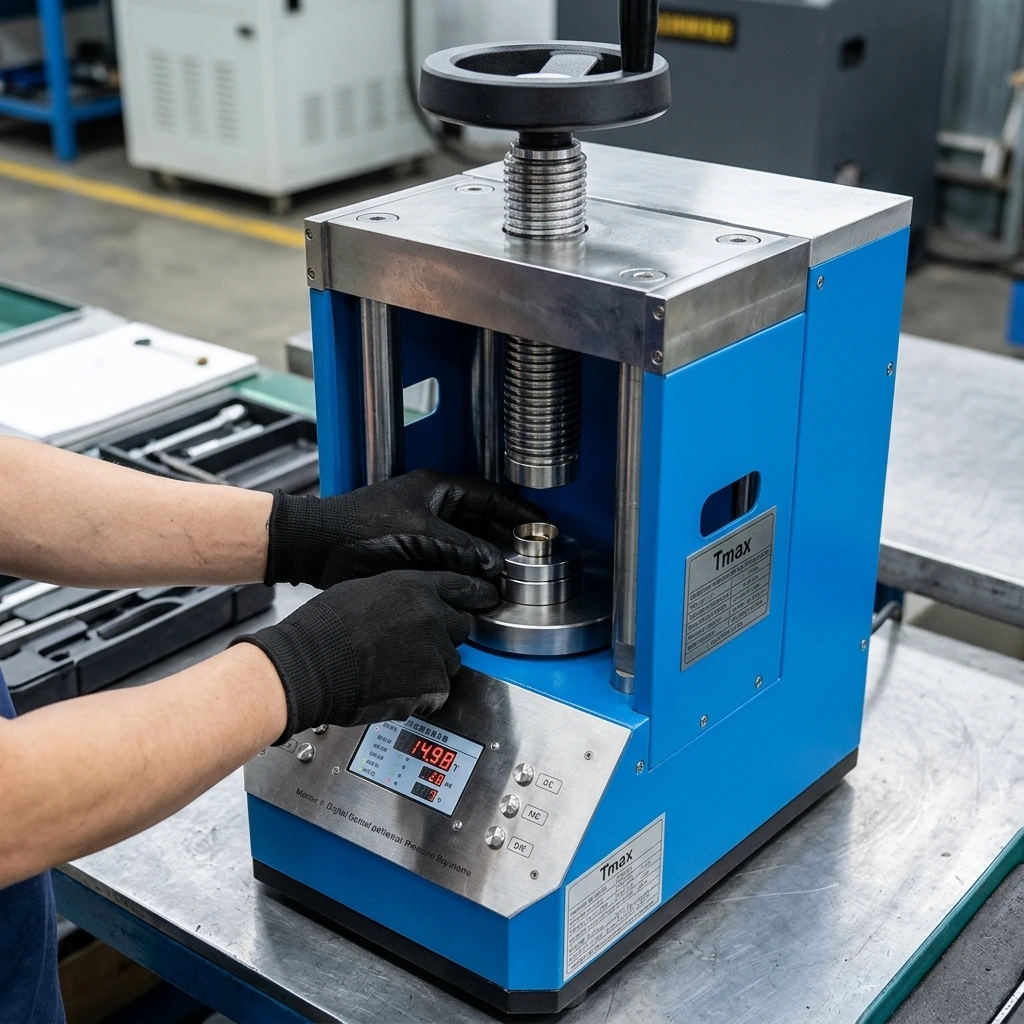
Many laboratories evaluate a range to balance routine tasks and high-density compaction. Selecting the proper capacity prevents mechanical fatigue on internal seals. Equipment designed for mid-range loads delivers repeatable compression without oil leakage over extended dwell cycles.
Laboratories balance sample throughput against operating budgets when choosing drive configurations. Manual units serve standard benchtop checks, while automated systems ensure repeatable pellet density for sensitive detection lines.
*Drive Type* *Pressure Control* *Throughput Rate* *Typical Research Application* Manual Hydraulic Hand-pump lever Low Standard preliminary testing Electric Motorized Push-button valve Moderate Routine spectroscopic prep
| Fully Automated
*Digital programmable* *High* *Advanced synthesis batches*
For elemental composition testing, using a produces flat discs with uniform surface profiles. That consistency prevents scattering errors during X-ray exposure. Electric and automated systems also support repeatable dwell durations, which protects delicate sample binders from crumbling after extraction.
Research procurement requires strict verification of factory capabilities and hardware safety. Standard university tenders require CE certification alongside stable long-term warranty terms. Sourcing from direct manufacturing facilities cuts distributor premiums and shortens lead times for critical research projects.
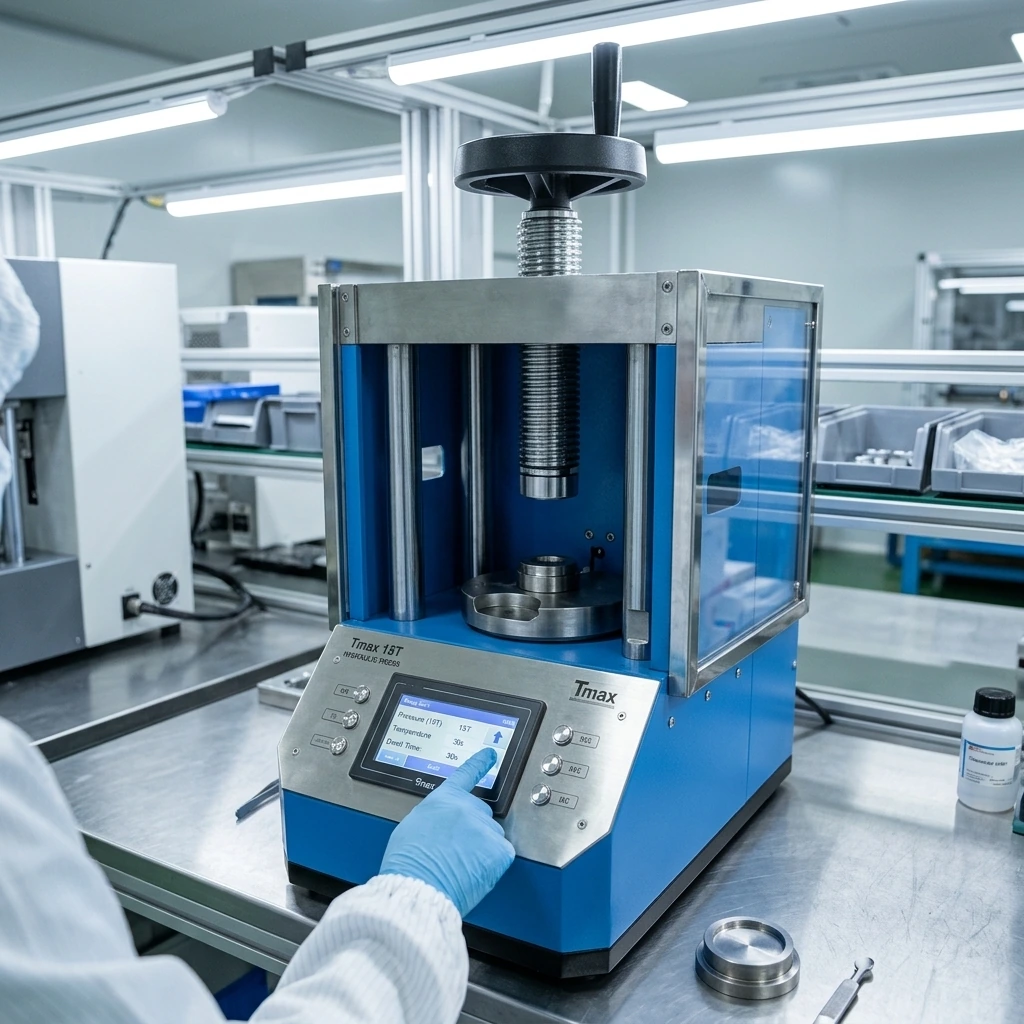
Working with high-density targets demands specialized engineering. Utilizing a requires rigid alignment platens to avoid uneven stress during powder consolidation. Advanced battery and materials labs also verify that platen surfaces resist corrosive additives during pellet ejection. Factory-direct testing and robust two-year warranties provide the operational security modern research groups require.
Yes, standard platens accommodate custom hardened alloy and tungsten dies from 6mm to 40mm. Our engineering team matches tooling dimensions to your specific electrochemical pellet requirements.
does a 15T hydraulic press require in a busy lab? Routine maintenance involves checking hydraulic fluid levels, inspecting seal rings annually, and wiping down platen surfaces. Electric models operate cleanly with minimal mechanical intervention during regular use.
All export units carry CE compliance documentation, factory calibration sheets, and two-year warranty coverage to satisfy institutional procurement audits.

Quanzhou Lineng Mechinery and Equipment Co., Ltd is a technology-based enterprise, integrating R&D, manufacturing, sales and service.

 IPv6 network supported


