what are you looking for?

Sample preparation failures often ruin analytical accuracy in university and battery testing laboratories. Uneven density and fragile pellets waste valuable powder samples. This review evaluates how an automatic hydraulic pellet press replaces unstable manual lever units. We examine pressure ranges from 3T to 50T, dwell-time precision, and factory direct sourcing to help lab directors optimize workflow. Can your lab streamline solid-state sample compaction without risking contamination? Exploring automated pressing parameters reveals how controlled force ensures uniform, crack-free discs for high-precision spectroscopy and material synthesis.
Standardizing analytical samples requires strict mechanical tolerances. Manual screw mechanisms cannot deliver the consistent dwell pressure needed for fine powders. An automatic hydraulic pellet press addresses this gap by programming dwell duration and release speeds directly. Operators set target pressures between 3T and 50T via a digital interface, eliminating operator-dependent variations during compaction.

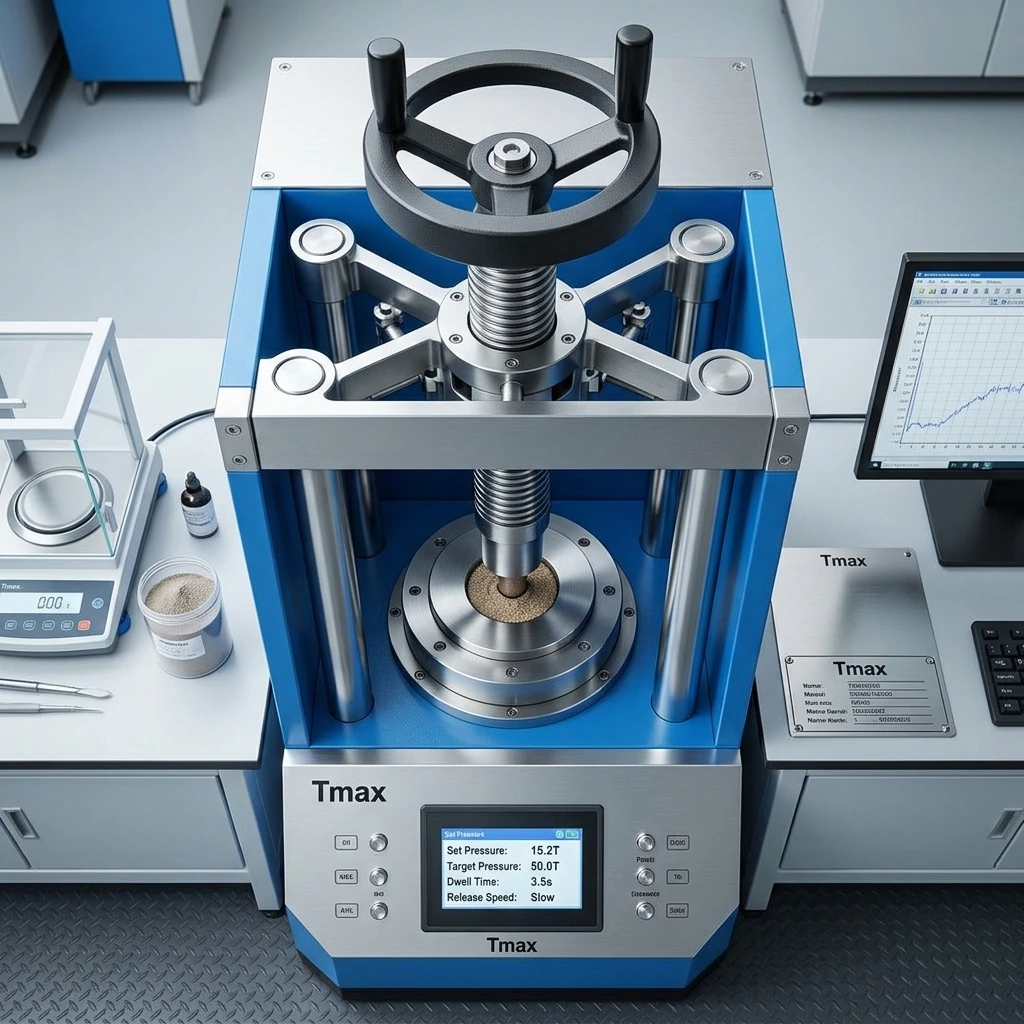
Uniform density prevents sample cracking during ejection. Advanced units utilize electric hydraulic power packs to govern compression cycles smoothly. For specialized tooling, researchers often integrate hardened tungsten or stainless steel assemblies. The automated decompression curve allows entrapped air to bleed off safely, maintaining sample integrity for sensitive downstream testing.
| Evaluation
*Metric* *Baseline Manual Spec* *Automated System Target* Force Consistency Manual gauge tracking Digital sensor control Pelleting Rejection Rate Variable by operator ≤ 1.0% sample loss
| Dwell
*Time Repeatability* *Human estimation* *Exact digital hold* Stroke Speed Control Unregulated Multi-stage release
Academic laboratories and quality control units manage varied powder consistencies daily. Implementing an automatic hydraulic pellet press for xrf analysis guarantees flat, highly consolidated surfaces. Flat analytical discs minimize matrix effects and secondary scattering during X-ray fluorescence tests. This structural stability produces clear spectral peaks without sample collapse inside vacuum chambers.
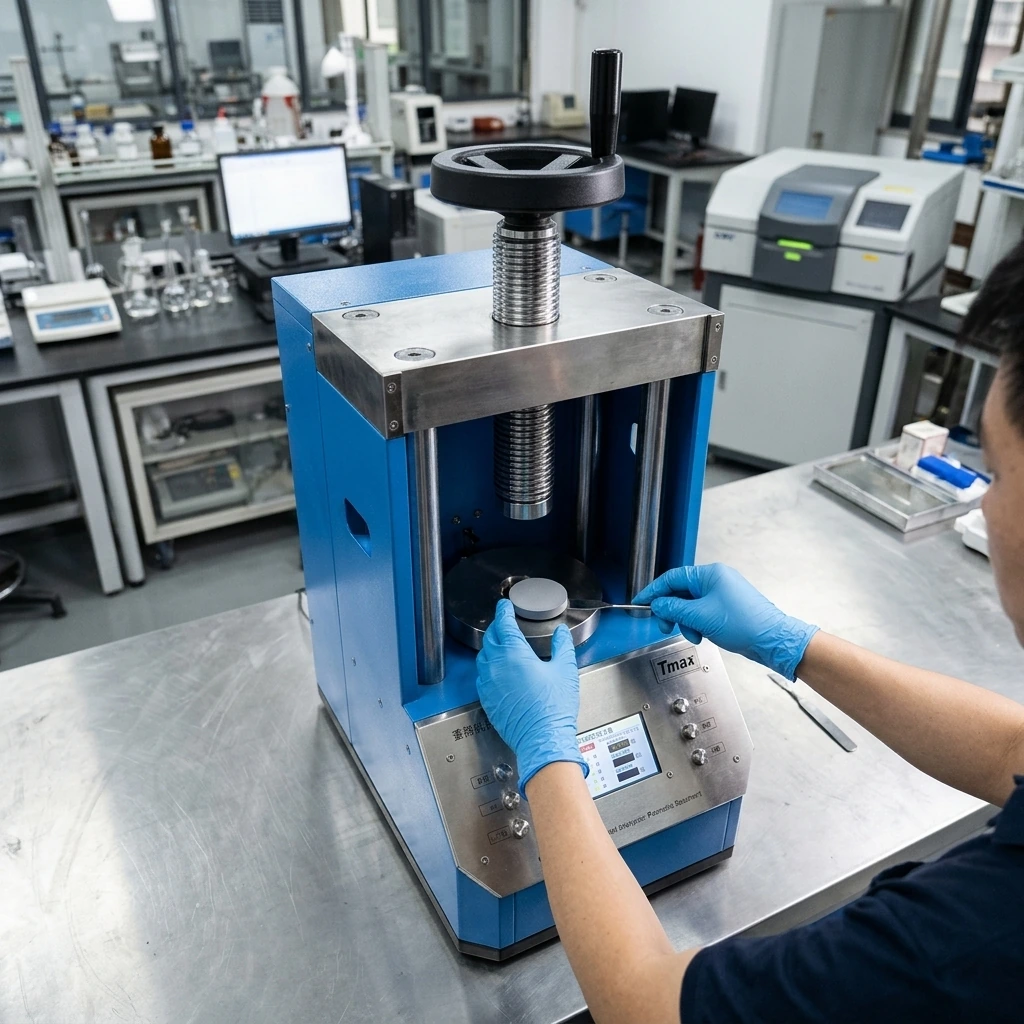
Energy storage laboratories experience similar benefits. Deploying an automatic hydraulic pellet press for battery material r&d allows precise fabrication of solid electrolyte pellets and cathode pellets. Controlled compaction density correlates with ionic conductivity measurements. In these setups, lab technicians routinely pair pellet presses with standard equipment to verify electrode behavior before scaling up to larger workflows.
Institutional buyers face complex procurement audits when securing laboratory machinery. Faculty committees prioritize documented machine safety, stable lead times, and factory-direct technical backing. Sourcing through certified manufacturers provides domestic compliance alongside significant cost advantages over imported alternatives. Direct access to replacement seals and platen parts minimizes unplanned experimental downtime.
Investing in a CE certified automatic hydraulic pellet press ensures all emergency stop mechanisms, interlocked safety shields, and electrical circuits comply with institutional safety codes. Built-in overload protection shields sensitive hydraulic cylinders from accidental over-pressurization. Direct coordination with engineering suppliers allows custom platen sizing, specialized die dimensions, and rapid delivery options that meet strict institutional grant spending deadlines.
Yes, high-grade hardened die sets withstand abrasive powders while the automated pump minimizes shear stress. The controlled loading curve prevents die galling, protecting internal cylinder components across thousands of operational cycles.
The enclosed electric hydraulic chassis prevents fluid misting, ensuring compliance with clean environment protocols. Its compact footprint fits beside fume hoods or inside dry rooms without contaminating delicate chemical mixtures.
Standard 3T to 50T configurations ship within two to four weeks. Full technical manuals, factory calibration certificates, and standard wiring schematics accompany each shipment to facilitate smooth university procurement clearances.

Quanzhou Lineng Mechinery and Equipment Co., Ltd is a technology-based enterprise, integrating R&D, manufacturing, sales and service.

 IPv6 network supported


