what are you looking for?

Material failure during thermal compression usually traces back to uneven heating platens or unstable pressure holding. For researchers fabricating solid-state cells, functional films, or multilayer sheets, poor platen parallelism ruins delicate samples quickly. This commercial survey examines how modern benchtop units integrate heating elements and automated hydraulics into rigid frames. You will learn the mechanical tolerances required to prevent interfacial delamination, evaluate thermal distribution benchmarks, and identify key safety configurations before requesting capital approval for your departmental facility.
Uniform pressure distribution across small substrates demands high structural rigidity. Deflection in structural crossbeams causes edge-crush defects and inconsistent bonding thickness across substrate surfaces. Benchtop hydraulic systems utilize four-column guided frameworks to counteract axial stress, keeping upper and lower platens aligned under continuous loads.

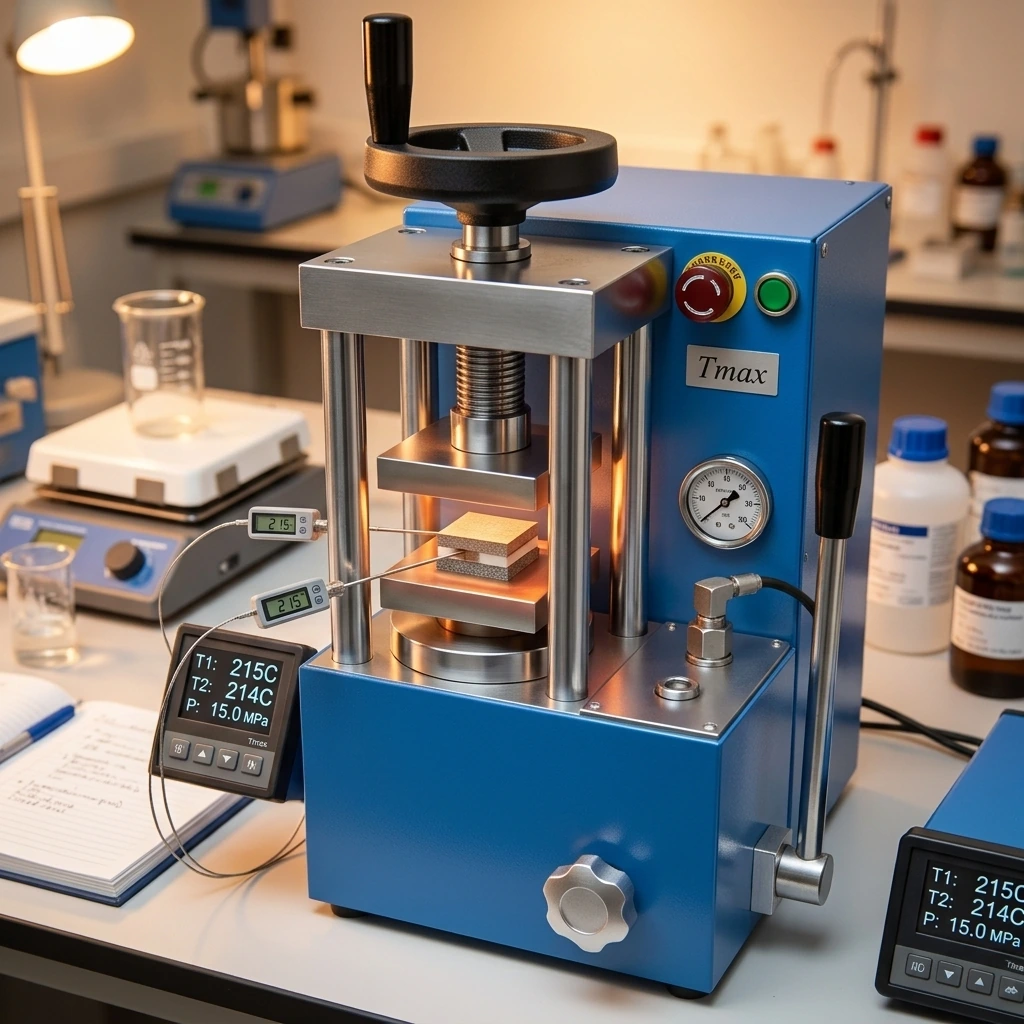
Consistent heat transfer relies on dual-zone electric cartridges embedded directly inside ground steel blocks. Independent PID controllers regulate each platen surface to prevent thermal gradients from warping thin films. For critical research, an must deliver stable platen temperatures with minimal overshoot. Precise boundary temperature regulation stops volatile additives from evaporating unevenly during annealing stages.
Manual hydraulic pumps introduce operator variance, which ruins batch reproducibility. Motorized electro-hydraulic power units maintain target tonnages through automated feedback loops. An integrated digital pressure sensor detects microscopic pressure decay, instantly activating the micro-pump to compensate without overshooting the force ceiling.
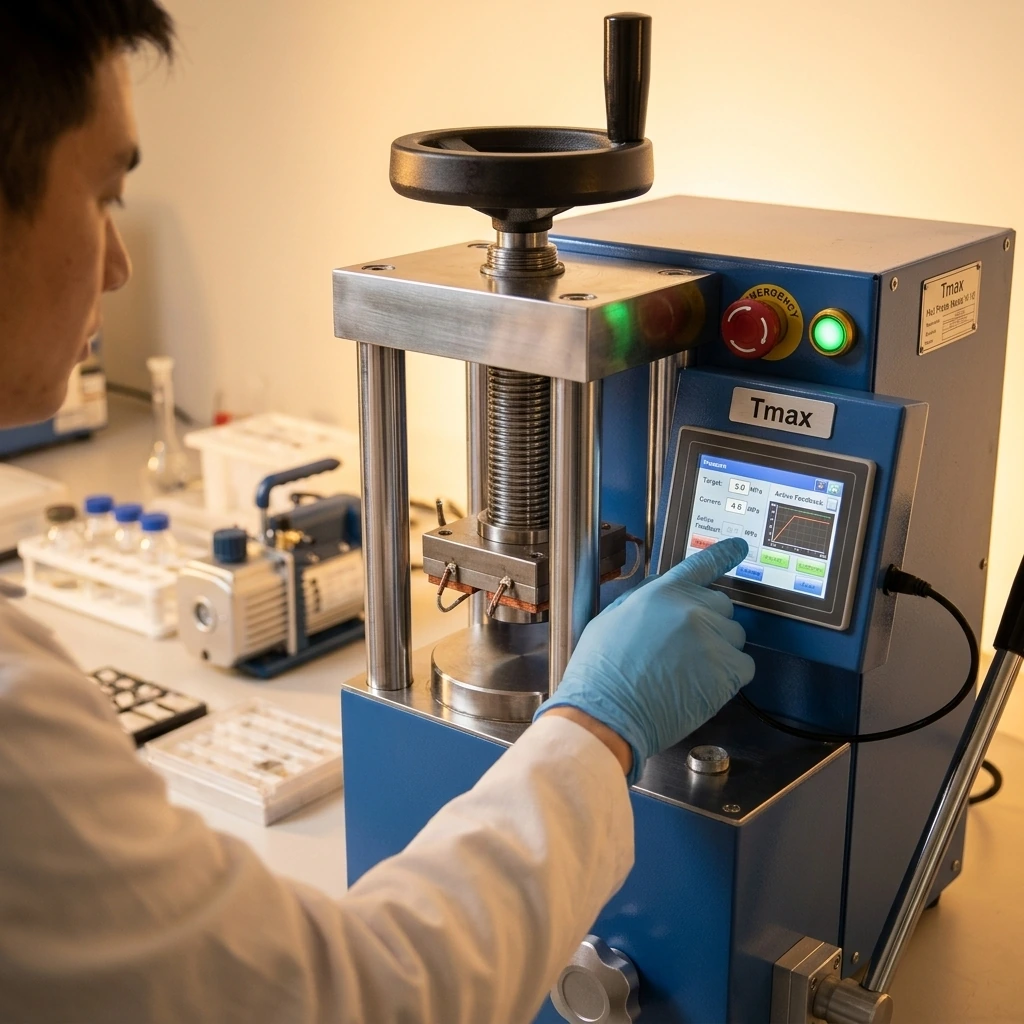
The internal hydraulic manifold routes fluid through proportional valves to enable multi-step compression profiles. Researchers can program low-pressure pre-heating phases followed by rapid high-pressure compaction. Facilities working on multilayer bonding often deploy an to eliminate trapped air voids during the resin flow phase. Programmable dwell timers release hydraulic pressure automatically once curing cycles finish.
*Performance Parameter* *Laboratory Benchmark* *Operational Impact* Temperature Uniformity ±1.5°C across working area Eliminates thermal boundary defects Pressure Stability ±0.1 MPa during hold Prevents internal layer slippage
| Platen
*Parallelism* *≤ 0.05 mm across surface* *Ensures uniform substrate thickness*
Benchtop research environments demand compact machine footprints without sacrificing structural safety. Heavy steel frames are engineered to absorb vertical compressive force internally, keeping gross weight within standard workbench load ratings. The hydraulic power pack sits tucked inside the lower chassis, which minimizes countertop footprint.
Laboratory operation prioritizes physical barriers and emergency systems. Integrated interlock doors with transparent polycarbonate shields protect operators from accidental thermal contact or material ejection during high-tonnage runs. Dual physical emergency stop buttons cut motor power immediately while dumping internal hydraulic oil into return reservoirs. Choosing verified built to international industrial norms ensures full compliance with institutional safety mandates.
Yes, units bearing the declaration follow Machinery Directive standards covering low-voltage electrical systems, emergency stop performance, and mechanical interlock shielding for compliant benchtop operation.
Integrated proportional valves enable segmented pressure ramping, starting below light contact thresholds before gradually increasing tonnage as the polymer layer softens under heat.
Dual internal water cooling passages can be integrated into the tool steel plates, allowing fast thermal cycling down to ambient handling temperatures after cycle completion.

Quanzhou Lineng Mechinery and Equipment Co., Ltd is a technology-based enterprise, integrating R&D, manufacturing, sales and service.

 IPv6 network supported


