what are you looking for?

Sample preparation inconsistencies often ruin accurate spectroscopic and electrochemical data, forcing lab teams to repeat entire test cycles. Manual pressing introduces human error in force and dwell duration, which compromises pellet density. Selecting a reliable automatic hydraulic press eliminates these discrepancies through digital programming and uniform pressure curves. This procurement overview examines mechanical drives, pressure tonnage selection from 3T to 50T, and key integration parameters. It helps research directors and facility engineers choose laboratory machinery that meets strict analytical standards and institutional procurement rules.
Laboratory compaction units generally utilize manual, electric, or fully programmable driving systems. While manual hand pumps serve basic tasks, they lack repeatable dwell control. An electric benchtop unit provides motorized compression without physical fatigue, making it suitable for standard testing routines.
Advanced characterization requires an automatic hydraulic press with precise dwell time to prevent micro-cracks during pressure release. Digital controls allow users to program multi-stage ramping, target loads, and decompression rates. Research teams working with diverse powders can explore specialized configurations within the range to match experimental requirements.

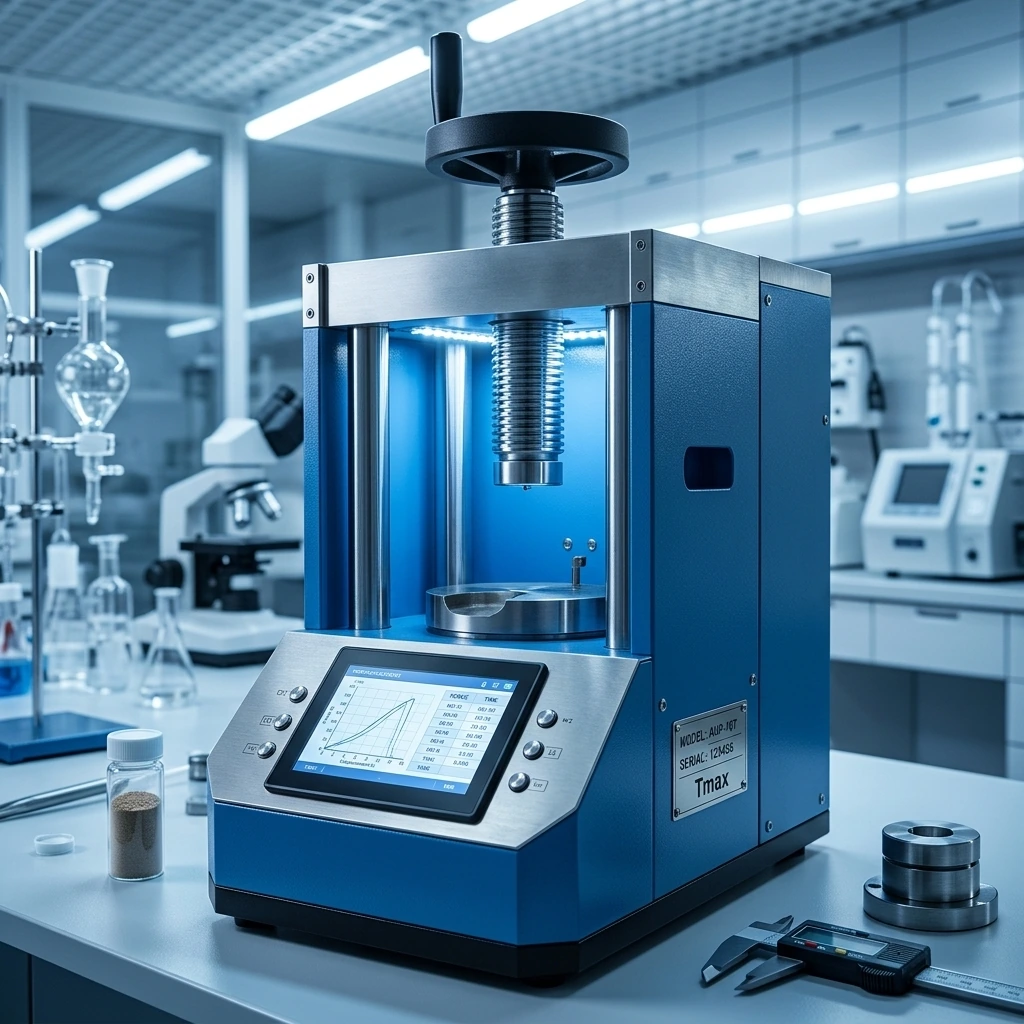
Uniform density throughout the pellet prevents beam scattering in analytical spectrometers. Programmable systems maintain load values accurately, compensating for natural powder settling under high force. This operational consistency ensures repeatable results across different shifts and operators.
Matching machine capacity to specimen dimensions prevents mechanical strain and tooling failure. Benchtop units span from 3T for miniature discs up to 50T for dense battery electrodes. Operating consistently near maximum rated load causes premature seal wear, so sizing up by twenty percent is standard engineering practice.
*Sample Type* *Pellet Diameter* *Recommended Force* *Drive Recommendation* Analytical Salts 13 mm 8 to 12 T Electric Drive
| Advanced
*Electrodes* *15 to 20 mm* *15 to 25 T* *Automatic System*
| Structural Ox
*ides* *20 to 40 mm* *30 to 50 T* *Heavy Automatic*
High-tonnage frames handle tough materials without frame deflection. An automatic hydraulic press for powder ceramics requires stable load holding to consolidate hard particles without internal delamination. Selecting the proper die tooling from the dedicated catalog protects platens and guarantees uniform radial dimensions.
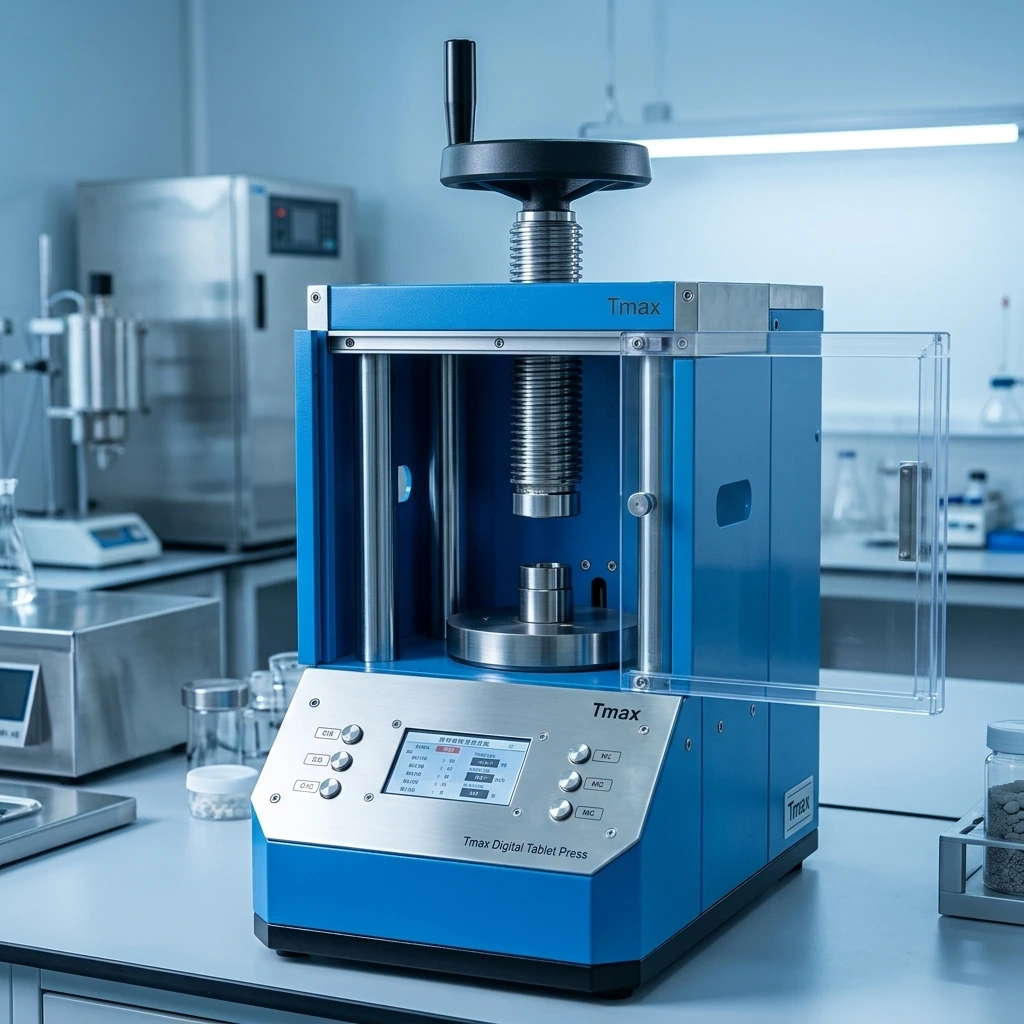
Rigid columns resist lateral deflection when pressing asymmetrical powders. Pairing precision dies with balanced hydraulic cylinders ensures consistent sample flatness, which is essential for downstream surface analysis and structural testing.
Analytical instruments require flat surfaces and structural cohesion. Using an automatic hydraulic press for xrf analysis ensures that powder binders form smooth pellets without loose grains that could contaminate vacuum chambers. Controlled decompression cycles stop trapped air from shattering compressed briquettes as pressure drops.
Clean sample consolidation is equally vital in energy storage research. Battery cathode active materials and solid-state pellets demand precise density gradients to conduct ions efficiently. Facilities preparing novel cell chemistries often combine pressing equipment with a specialized to handle moisture-sensitive powders under inert gas.
Programmable cycles permit automated multi-step compression. First, the ram applies light pressure to bleed interstitial air, then ramps up to peak tonnage. This automated sequence minimizes binder volume and improves sample throughput.
Procuring analytical equipment for university laboratories or industrial centers involves strict verification. Buyers must review structural safety standards, production capabilities, and vendor documentation before issuing formal purchase requests. Quanzhou Lineng Machinery and Equipment Co., Ltd fabricates hydraulic units using heavy-duty boring and grinding machinery to guarantee platen parallelism.
Lineng brand systems offer CE certification and a two-year warranty, serving as viable replacements for costly imported presses. Working directly with manufacturing facilities shortens lead times, provides direct technical support, and simplifies custom die integration. Verifying factory testing protocols prior to shipping helps procurement teams pass institutional compliance audits without delays.
Yes, the digital controller allows researchers to set multi-step loading profiles, adjustable ramp speeds, and controlled decompression rates tailored to fragile green ceramic compacts.
It uses smooth hydraulic ramping and uniform force distribution to bind loose powder, eliminating uneven internal stress that causes flaking or disc breakage.
Routine maintenance involves checking hydraulic fluid levels, inspecting platen surfaces for debris, and performing annual pressure sensor calibration to ensure dwell accuracy.

Quanzhou Lineng Mechinery and Equipment Co., Ltd is a technology-based enterprise, integrating R&D, manufacturing, sales and service.

 IPv6 network supported


