what are you looking for?

Solid-state battery research and advanced ceramics development often fail during the initial powder compaction stage. Traditional uniaxial pressing leaves density gradients, causing micro-cracks and structural failure during sintering. Using cold isostatic pressing solves this fundamental material issue by applying equal liquid pressure from all directions. This article explains how this process achieves structural uniformity, helps you select the right equipment, and guides your transition from lab-scale formulation to pilot plant production.
Uniaxial pressing applies force from only one or two directions, which creates friction between the powder and the die wall. This uneven force distribution leads to density variations within the green body. During high-temperature sintering, these density differences cause warping, distortion, and unpredictable shrinking.
In contrast, uses a fluid medium to apply equal pressure across the entire surface of a flexible mold. This multidirectional force ensures a completely uniform green density, which is essential for crack-free sintering of complex shapes and high-aspect-ratio samples.
*Compaction Metric* *Uniaxial Pressing* *Isostatic Pressing* Pressure Distribution Single or dual direction Equal from all directions Green Density Uniformity Poor, higher at outer edges Excellent, highly uniform Shape Capability Simple pellets and discs Complex geometries and rods Sintering Distortion High risk of warping Minimal, predictable shrinkage

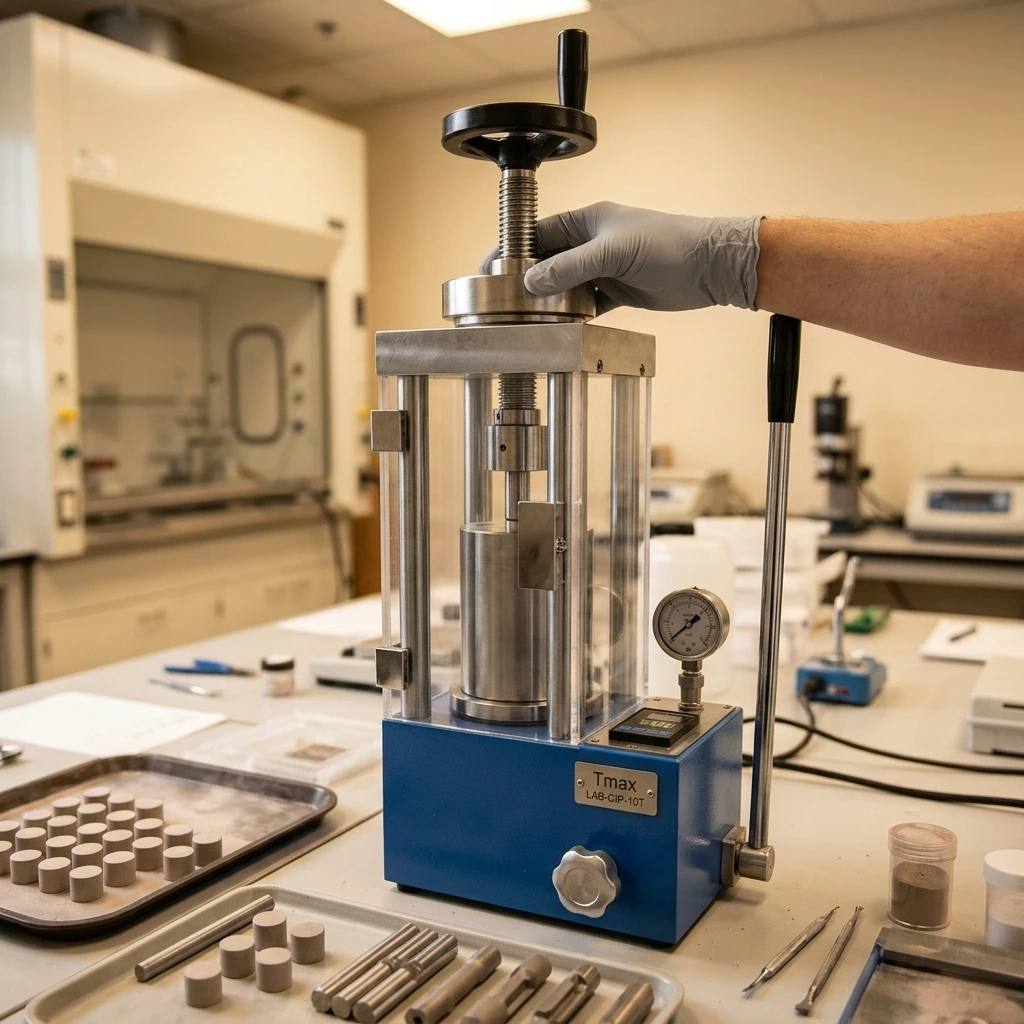
Different materials require specific compaction profiles to reach their theoretical densities. For instance, cold isostatic pressing for functional ceramics requires precise pressure control to prevent delicate microstructures from collapsing.
When working with solid-state electrolytes, cold isostatic pressing for clean energy materials demands a dry, inert environment to prevent chemical degradation. For these applications, a compact chamber that integrates easily into a glove box is highly beneficial.
For scaling up research, cold isostatic pressing for high-density molding requires systems that offer dual-mode operation. Having both manual and electric pressure modes allows engineers to run quick, single-sample tests or execute automated, multi-step pressure cycles for pilot production.
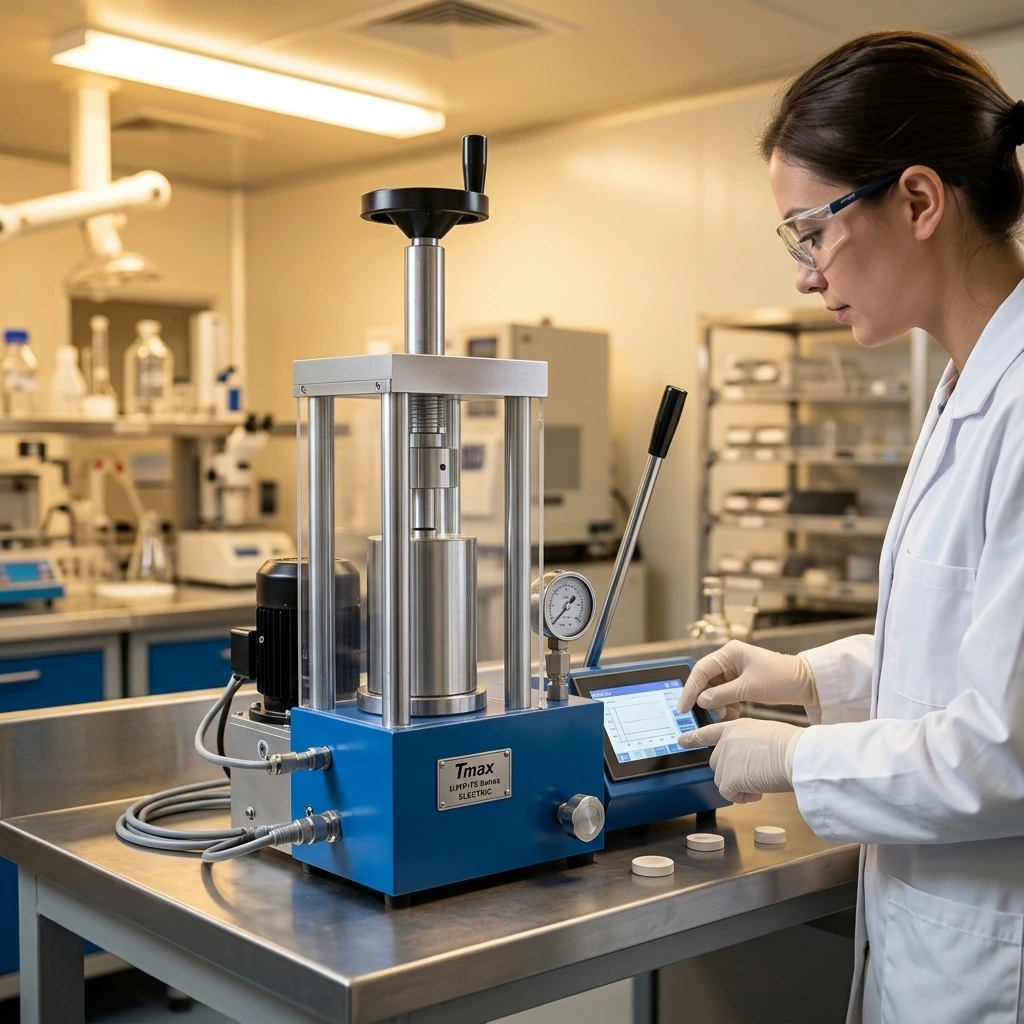
To get the best results from your isostatic press, you must follow a structured preparation process. First, fill the flexible silicone or polyurethane mold with your prepared powder and seal it tightly to prevent water penetration. Next, place the sealed mold into the hydraulic chamber of the to begin the cycle.
Slowly increase the pressure to allow trapped air to escape from the powder particles. Once you reach the target pressure, hold it for at least one minute to allow the particles to rearrange and lock together. Finally, release the pressure slowly to prevent decompression cracks, which can ruin hours of material preparation.
Yes, this method is ideal for producing functional ceramics with complex geometries or high aspect ratios. Because the liquid pressure is applied uniformly through a flexible mold, the green body achieves a highly consistent density throughout, preventing warping during the subsequent firing process.
The powder sample is completely sealed within a waterproof, flexible elastomeric sheath before being placed into the water chamber. This physical barrier ensures that sensitive battery materials, such as solid-state electrolytes, never come into contact with the hydraulic fluid.
A dual-mode system, such as the DJYP-TS series, combines manual and electric operation. Manual mode allows for quick, tactile control during initial material trials, while the electric mode provides automated, stable, and highly repeatable pressure dwell times necessary for pilot-scale quality control.

Quanzhou Lineng Mechinery and Equipment Co., Ltd is a technology-based enterprise, integrating R&D, manufacturing, sales and service.

 IPv6 network supported