what are you looking for?

Achieving uniform density in solid-state electrolytes, battery electrodes, and advanced ceramics during lab-scale powder compaction remains a persistent technical challenge. Standard uniaxial pressing often leaves density gradients, leading to internal cracks, warping, or premature cell failure during cycling. Selecting a dependable provides multi-directional hydraulic pressure, eliminating internal voids and boosting green density. Lineng designs compact, dual-mode cold isostatic presses that allow research laboratories and pilot line engineers to transition seamlessly from manual sample preparation to precise automated pressing.
Unlike single-axis hydraulic presses, cold isostatic pressing applies fluid pressure uniformly across all surfaces of a sealed mold. This equalized force eliminates local stress concentrations, ensuring consistent material density across complex shapes.

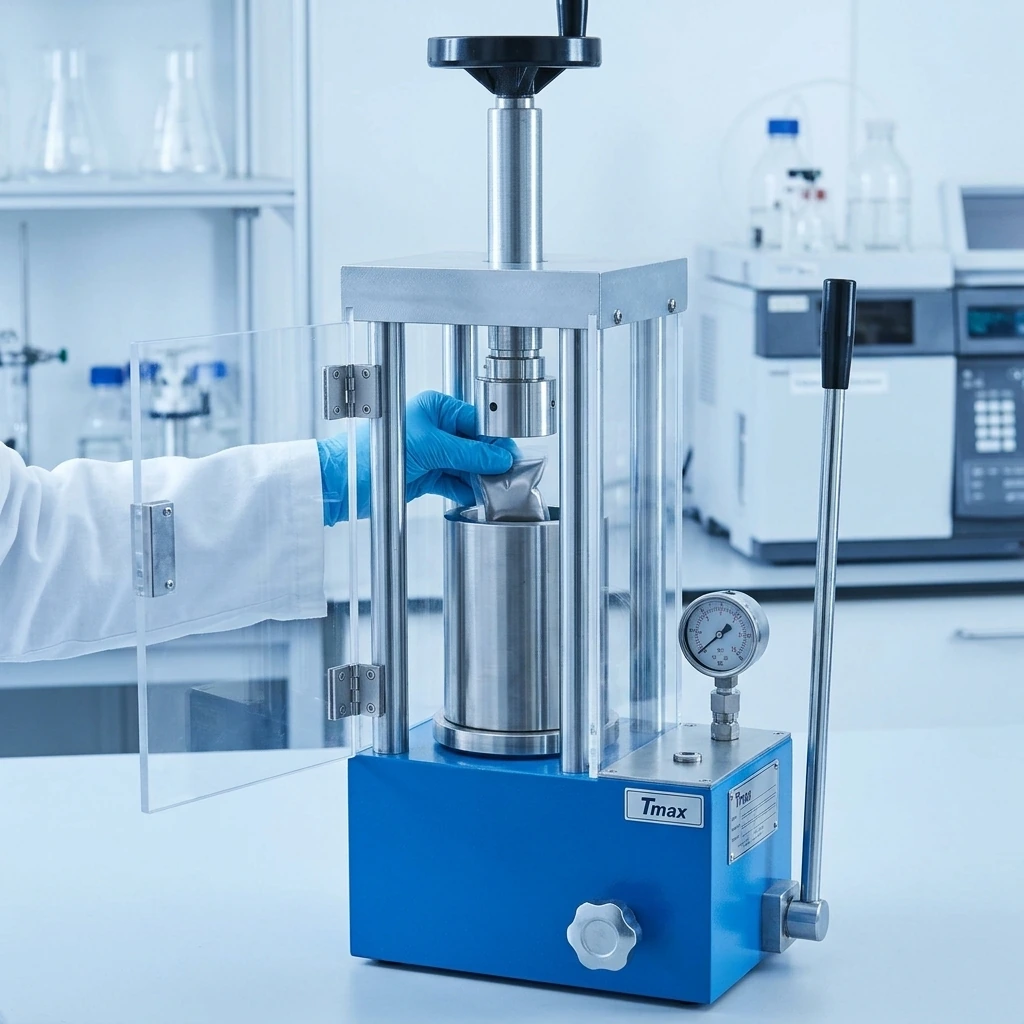
The DJYP-TS series incorporates both manual and electric pressurization modes into a single compact footprint. Researchers can use manual pressure control for quick, small-scale sample tests, then switch to the electric drive mode for higher press speeds and repeatable force retention.
| *Operational Mode* | *Primary Mechanism* | *Pressurization Speed* | *Ideal Application Scenario* |
|---|---|---|---|
| Manual Mode | Hand-operated hydraulic pump | Adjustable by operator | Quick feasibility testing & single sample pre-packing |
| Electric Mode | Automated motor-driven hydraulic pump | Rapid, constant rate | High-repeatability studies & continuous sample batches |
When handling delicate powder blends or sensitive solid-state electrolyte formulations, maintaining steady hold times prevents micro-cracking upon pressure release.
Solid-state battery research requires exceptional particle contact to minimize interfacial resistance. A dedicated enables researchers to compact sulfide, oxide, or polymer electrolyte powders into high-density sheets or discs.
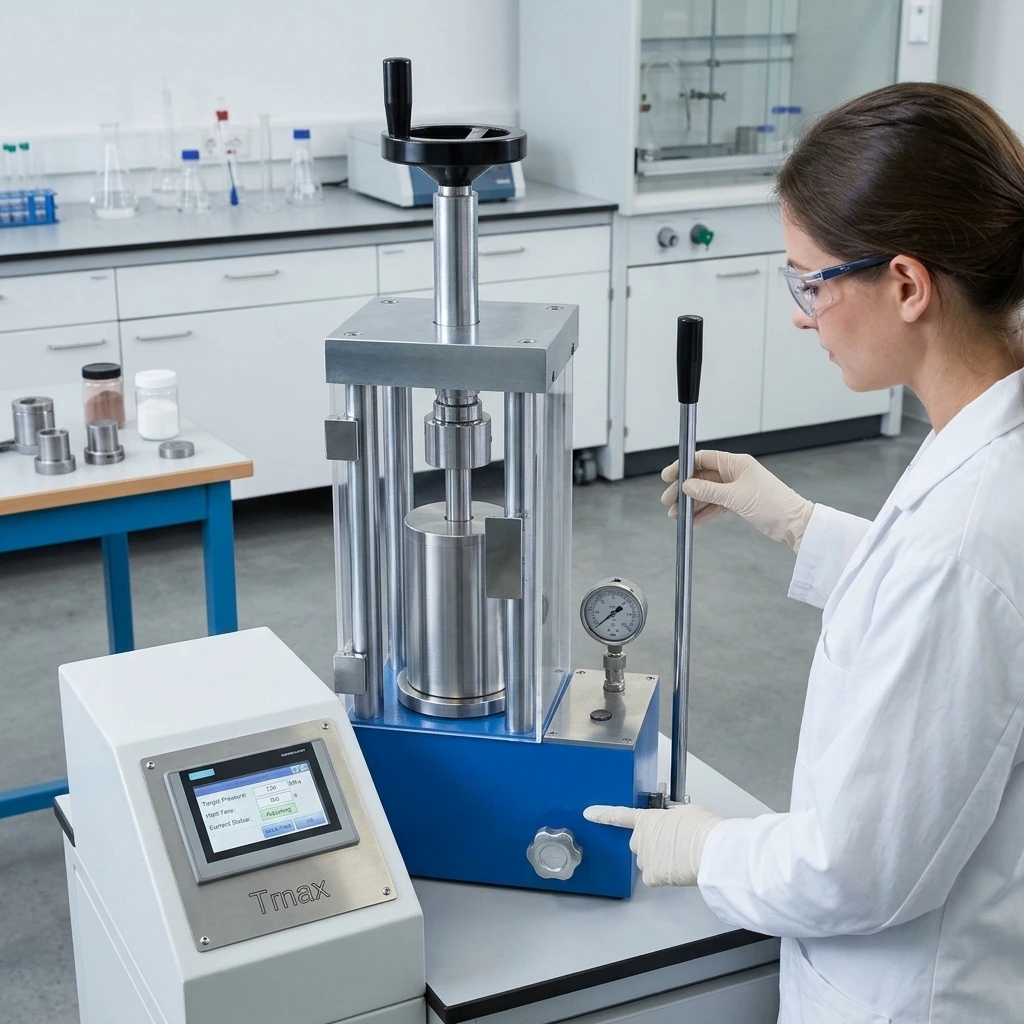
For higher throughput environments, automated ZYJP models utilize a top-plate swing arm design combined with programmable logic controllers. Operators input target holding pressures and dwell times, allowing the machine to execute uniform pressing cycles with minimal operator intervention.
To optimize sample preparation, pairing the press with appropriate configurations prevents slurry leakage and sample contamination. High green density directly translates to improved ionic conductivity and superior structural stability after sintering.
| *Process Variable* | *Target Specification* | *Impact on Battery Material* |
|---|---|---|
| Green Density Uniformity | Variation ≤ 1.0% | Prevents localized current hot spots |
| Pressure Hold Stability | ±0.5 MPa accuracy | Reduces internal void formation |
| Pressure Release Rate | Controlled step-down | Prevents sample delamination or cracking |
Operating ultra-high hydraulic pressure chambers requires rigorous structural engineering and reliable safety features. Every undergoes structural stress testing to withstand continuous pressure cycles safely.
Lineng incorporates dual safety interlocks, over-pressure relief valves, and reinforced pressure vessels across its lab press lineup. The compact physical footprint allows easy installation inside standard laboratory rooms without requiring major facility alterations.
Integrated digital pressure gauges display real-time chamber pressure, giving lab technicians clear visibility during sensitive compaction stages. This combination of structural safety and precise hydraulic regulation ensures long-term operational consistency for university research labs and industrial pilot lines alike.
Yes, cold isostatic pressing applies uniform hydraulic force from every angle, making it ideal for compacting solid-state electrolyte powders. This omnidirectional pressure eliminates internal density variations, minimizes micro-cracks, and maximizes particle-to-particle contact compared to conventional uniaxial presses.
Standard compact and dual-mode lab models typically ship within 2 to 4 weeks depending on current stock and custom mold requirements. Each unit undergoes strict factory acceptance testing before shipment, complete with protective export packaging, operational manuals, and full technical support.
Every CE certified unit comes with a standard 1-year comprehensive warranty, complete operation training, and 24-hour online technical assistance. Spare parts support and lifetime maintenance guidance are provided to ensure uninterrupted operation in university laboratories and industrial research centers.

Quanzhou Lineng Mechinery and Equipment Co., Ltd is a technology-based enterprise, integrating R&D, manufacturing, sales and service.

 IPv6 network supported