what are you looking for?

Achieving uniform density during thermal pressing often fails when temperature fluctuates across small heating plates. For solid-state electrolyte research or thin-film processing, minor thermal gradients lead to boundary defects and sample cracking. Laboratories require reliable hydraulic force and thermal stability without taking up half the workbench. A compact benchtop heated press delivers controlled heat and force directly within your current lab configuration. Exploring its structural features, heating performance, and practical applications helps research teams choose the right setup for precision material synthesis.

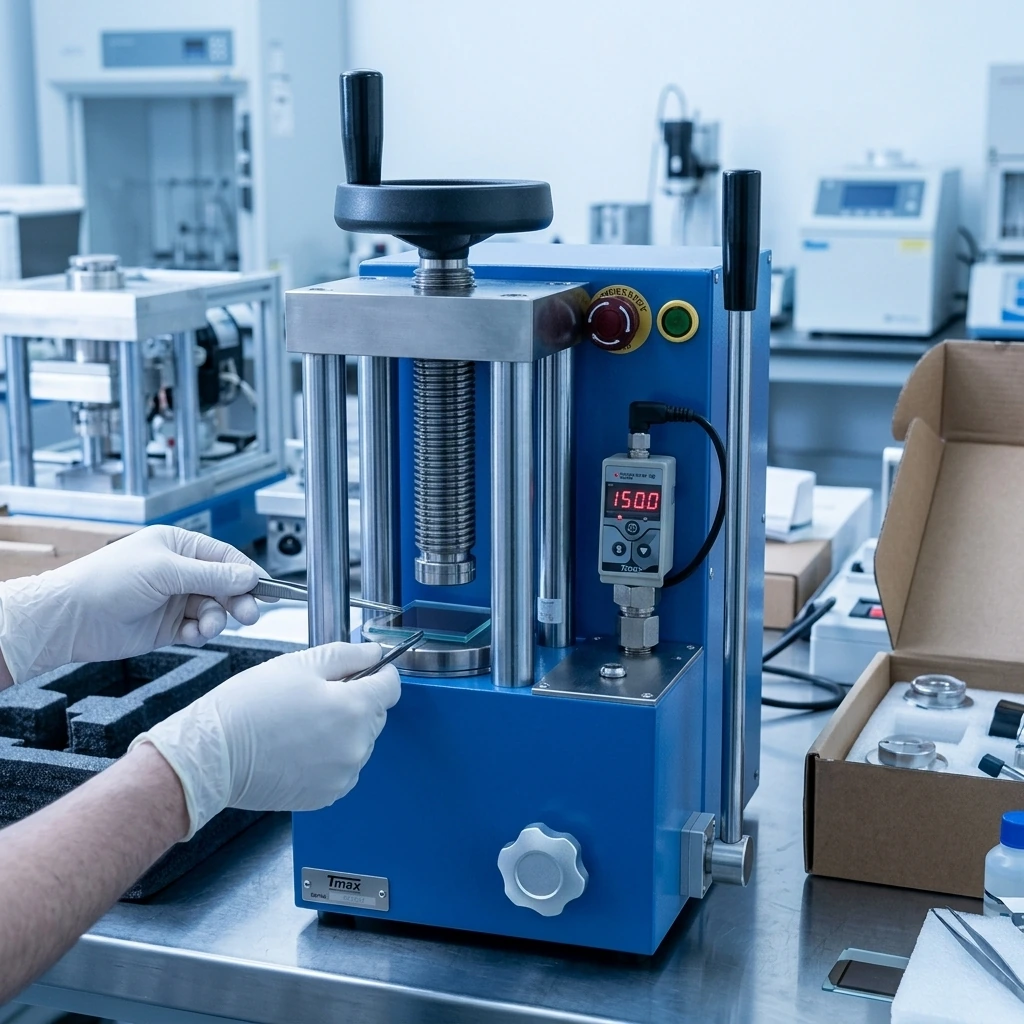
Sample fabrication requires dual precision. Applying high pressure without exact temperature management causes uneven binder curing and phase separation. Modern compact presses combine dual heating platens with digital PID controllers to maintain minimal thermal variance across the surface.
Flatness of the heating platens ensures equal force distribution. If platens warp under heat, the sample suffers from localized pressure peaks. Lineng designs its units with hardened platen surfaces and integrated heating elements, keeping thermal distribution uniform up to elevated temperatures.
| *Performance Metric* | *Standard Target* |
|---|---|
| Temperature Uniformity | ±1°C across platen surface |
| Maximum Heating Range | Ambient to 300°C |
| Platen Parallelism | ≤ 0.05 mm |
| Hydraulic Pressure Hold | 24-hour continuous stability |
Using a allows researchers to press sensitive polymer matrices or composite sheets without risking heat-induced degradation.
Advanced energy storage and material research demand tight control over interface resistance. Fabrication techniques rely on simultaneous heating and compacting to merge layers without trapped air or void formation.
delicate film layers require consistent heat to form clean crystalline structures. Utilizing a helps crystallize active layers evenly under low, stable mechanical loads. This thermal treatment reduces micro-cracks and optimizes cell efficiency.
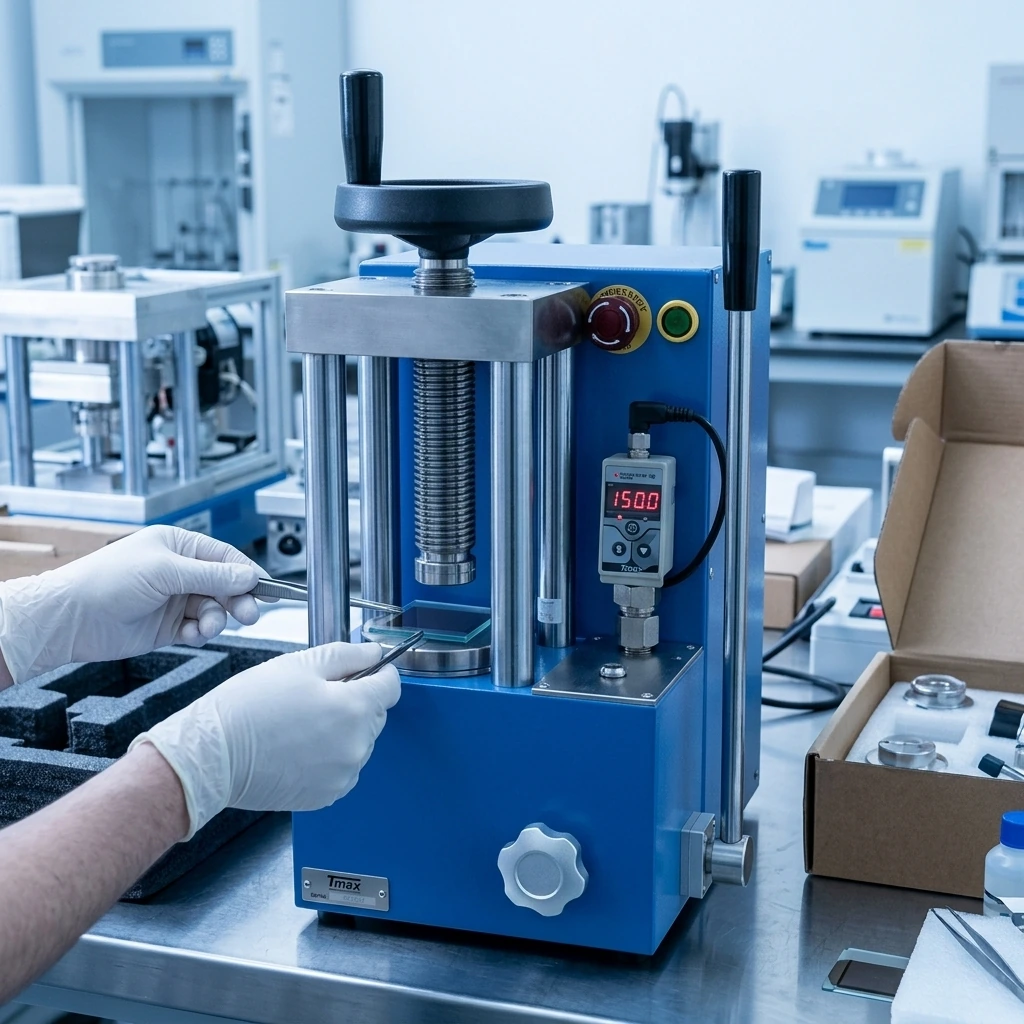
Layering heterogeneous materials requires precise dwell time at specific softening points. A dedicated provides controlled ramp rates, allowing polymers to flow into substrate pores before full curing occurs.
| *Application* | *Key Process Requirement* | *Primary Outcome* |
|---|---|---|
| Perovskite Solar Cells | Low pressure, precise heat ramp | Uniform crystallization without pinholes |
| Solid Electrolyte Sheets | High pressure, steady heat hold | Reduced interfacial resistance |
| Polymer Composites | Controlled thermal cycle | Void-free multi-layer bonding |
Benchtop equipment must prioritize lab safety and space utilization. Small research spaces cannot accommodate bulky industrial presses, yet safety standards cannot be compromised when operating under heat and tonnage.
Integrated protective shields prevent accidental contact with heated platens. Thermal insulation layers around the platen housing prevent heat transfer to the hydraulic system and outer chassis, protecting internal sensors.
Selecting equipment with CE certification ensures electrical components and pressure vessels meet standard international safety benchmarks. Compact footprints allow easy placement inside standard fume hoods or gloveboxes when working with air-sensitive samples.
Yes, compact models feature removable safety shields and optimized dimensions specifically engineered to pass through standard glovebox antechambers for inert environment operations.
Most units heat up at an average rate of 5°C to 10°C per minute, reaching target temperatures quickly while maintaining accurate thermal control to protect delicate substrates.
Standard configurations ship within two weeks, while customized platens or high-temperature modifications generally require three to four weeks including factory testing and compliance checks.

Quanzhou Lineng Mechinery and Equipment Co., Ltd is a technology-based enterprise, integrating R&D, manufacturing, sales and service.

 IPv6 network supported


