what are you looking for?

Achieving uniform density in solid-state electrolytes or advanced ceramics often fails with traditional dry pressing. Uneven pressure distribution leads to micro-cracks, structural warping, and weak spots during sintering. A cold isostatic pressing machine solves this by applying equal hydraulic pressure from all directions, ensuring homogeneous density throughout the compact. This guide explores how to select the right system to upgrade your material research or pilot production line.
Uniaxial pressing always suffers from friction along the die walls, which creates density gradients in your sample. This unevenness causes distortion during subsequent high-temperature sintering.
By contrast, an uses liquid as a pressure-transmitting medium. The powder, sealed inside a flexible silicone or rubber mold, experiences identical force from every angle.

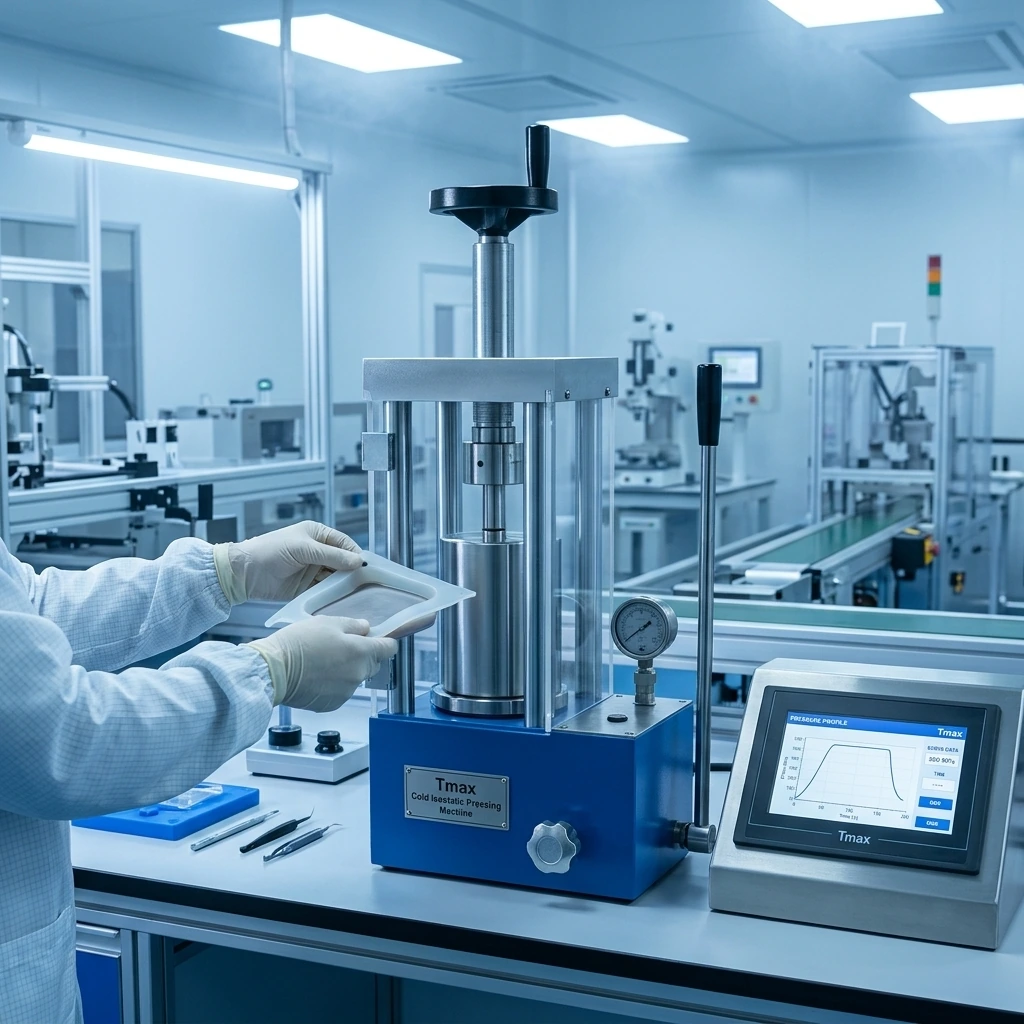
This uniform compaction is essential for producing high-quality components. It directly improves the mechanical and electrical properties of your finished parts.
*Compaction Method* *Pressure Distribution* *Green Density Uniformity* *Complex Shape Capability* Uniaxial Pressing Unidirectional, high friction loss Poor to moderate Low Isostatic Pressing Multidirectional, fluidic Excellent High
Different research stages require different levels of automation and capacity. For basic material screening, a compact manual or dual-mode electric model is highly efficient.
Modern laboratories benefit from versatile setups. The DJYP-TS series offers both manual and electric pressing modes. This design provides fast pressure buildup and excellent stability for daily powder compaction tasks.
For advanced workflows, a programmable auto press cold isostatic pressing machine allows users to set precise pressure curves. This automation ensures repeatability across multiple batches, which is critical for academic publishing and industrial quality control.
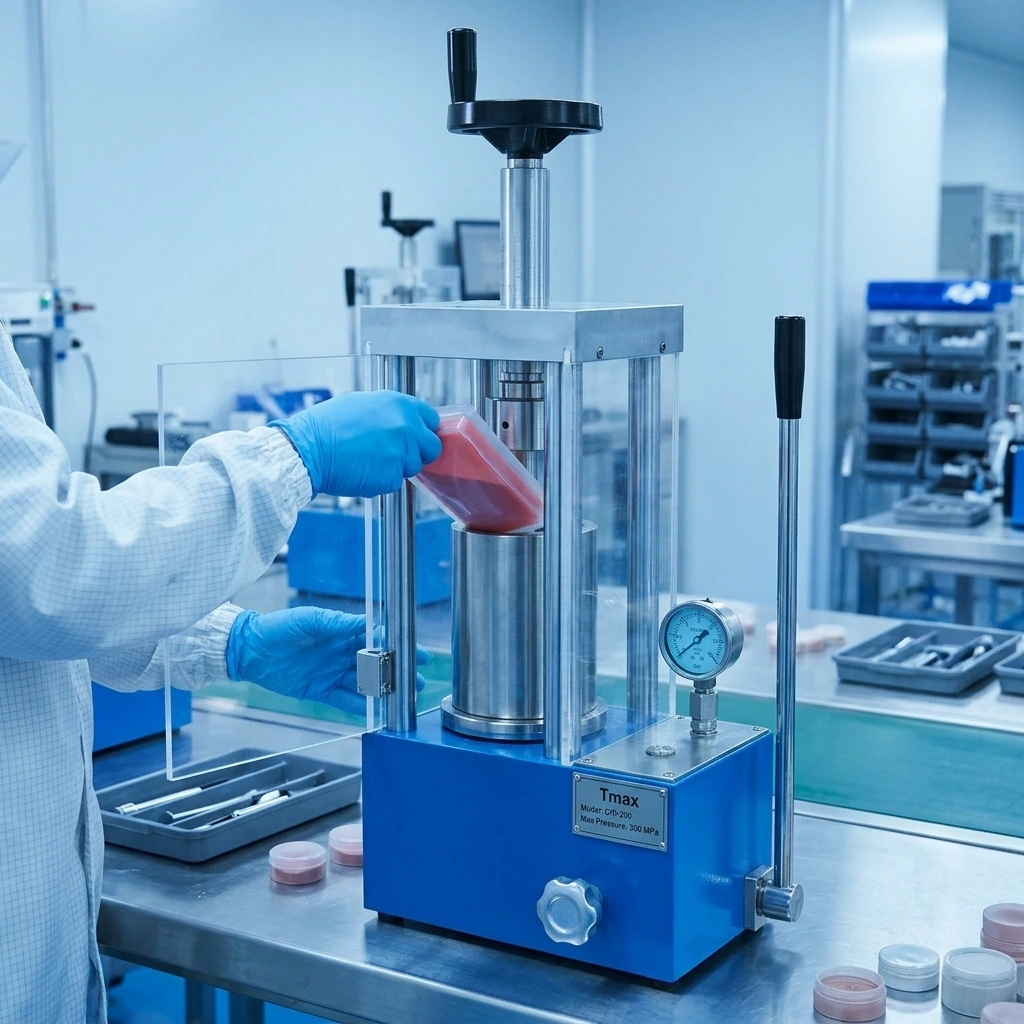
Different materials demand specific pressure profiles. You must match the equipment to your target material properties to prevent structural failure.
• *Solid-State Batteries:* Compacting sulfide or oxide electrolytes requires precise, moderate pressure to avoid damaging delicate particles.
• *Technical Ceramics:* Utilizing a specialized cold isostatic pressing machine for functional ceramics helps achieve the extreme green density required for fine-grained microstructures.
• *Refractory Metals:* Heavy alloy powders demand a robust cold isostatic pressing machine for high-density molding to eliminate internal voids before vacuum sintering.
If your research also requires thermal treatment under pressure, you might explore a to achieve simultaneous compaction and sintering.
High-pressure equipment requires strict safety measures. Always choose systems that feature certified pressure vessels and built-in protection shields.
An automatic overpressure relief valve is vital. This valve prevents the chamber from exceeding its maximum rated limit. Additionally, a rugged safety enclosure protects operators during the hydraulic compression cycle. For academic and corporate procurement, choosing CE-certified equipment ensures compliance with strict safety standards. You can find these safety features across our full range.
Yes, it is ideal for compacting solid-state electrolyte powders like LLZO or sulfide-based materials. The multidirectional hydraulic force ensures uniform contact between the electrolyte particles, which reduces interfacial resistance and improves ionic conductivity.
Yes, as long as your custom molds are made of flexible, leak-proof materials like silicone, polyurethane, or natural rubber. The molds must be vacuum-sealed before immersion in the hydraulic chamber to prevent liquid penetration.
Standard compact and electric models are usually ready to ship within 4 to 6 weeks, while highly customized systems may take longer. All our isostatic pressing machines carry full CE certification to meet laboratory safety requirements.

Quanzhou Lineng Mechinery and Equipment Co., Ltd is a technology-based enterprise, integrating R&D, manufacturing, sales and service.

 IPv6 network supported